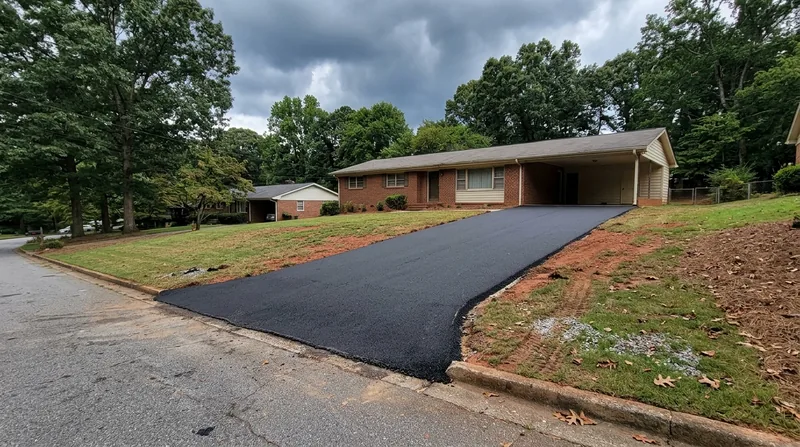




Asphalt resurfacing and overlay in Atlanta works best when the base is sound but the surface has worn from years of summer storms and heat cycling. Atlanta's Piedmont clay subgrade stays soft for days after heavy rain, and the hot, humid summers with afternoon thunderstorms test every pitch and edge of an older driveway. When alligator cracking spreads across thirty to forty percent of the surface but the base still holds, milling the worn top and laying new binder and surface courses pitched for Atlanta's grade gives you five to eight more years of life at a fraction of the cost of full replacement. We have served Atlanta, Sandy Springs, Marietta, Roswell, Alpharetta and the surrounding counties since 2012, and we know the terrain that governs how long asphalt holds here.
Why Asphalt Resurfacing and Overlay Makes Sense in Atlanta
Atlanta's post-war ranch belt and older Fulton and DeKalb neighborhoods were built on clay that never fully drains, no matter how well the driveway was pitched. The first generation of driveways in Gwinnett and Cobb subdivisions all failed in the same five to ten-year window, and now a second wave is cracking. Summer thunderstorms pound the asphalt, and the soft subgrade beneath shifts and settles. An overlay stops the bleeding before the base itself fails, but only if you catch it at the right moment. Wait too long, and the base breaks apart, and patching becomes a waste of money.
- Milling removes the worn, cracked surface and gives the new asphalt a clean, anchored base.
- A tack coat bonds the new binder course to the milled surface and prevents slippage under Atlanta's heat and load.
- New binder and surface courses are pitched to shed water toward the edges and away from the slab.
- The finished overlay adds three to four inches of new life without the cost and disruption of full removal.
An overlay works when the base is intact and the surface is the problem. If the base is broken or the subgrade has failed, an overlay will fail too, and the money is lost.
Key info: In Decatur, Dunwoody and other Fulton County neighborhoods, red clay subgrades soften for weeks after spring rains. An overlay holds longest when installed after the ground has dried out, usually late spring through early fall. Catch the surface cracking early, and an overlay saves you thousands versus a full replacement.
For more detail on when repair makes sense and when replacement is the better choice, see our page on driveway repair in Atlanta.
How Atlanta Asphalt Resurfacing and Overlay Works
We start with a site visit to measure the driveway, look at the base condition, and check for soft spots or settling. We give you a written estimate with tonnage and thickness specs so you know exactly what is going down. Once you approve, we schedule the work for a weather window when the ground is dry and the forecast is clear. Milling, tacking, and laying new asphalt all require dry conditions and a solid base.
- We measure the driveway and probe the base for soft spots or signs of failure.
- We mill the top layer of worn asphalt to a depth that removes all cracking and gives a clean surface.
- We apply a tack coat to bond the new asphalt to the milled base.
- We lay new binder course, then finish with surface course, pitched for Atlanta's drainage.
- The new asphalt cures for six to twelve months before you should apply any seal coat.
New asphalt must cure undisturbed for the first week and should not be sealed for at least six to twelve months while the material hardens.
Example: A Roswell homeowner had a thirty-year-old driveway with alligator cracking across forty percent of the surface. The base was intact, and the subgrade was stable. We milled the top two inches, laid new binder and surface courses, and added a driveway apron where it met the street. Total cost was about half what a full replacement would have been, and the driveway will hold for another seven to ten years.
If you need a full replacement instead, see driveway replacement in Atlanta for that process.
Resurfacing Methods and When to Use Each
| Approach | Description | Best for |
|---|---|---|
| Mill and Overlay | Remove worn surface to clean base, tack, and lay new binder and surface courses. | Sound base, surface cracking, alligator cracks over thirty to forty percent of area. |
| Overlay Only | Lay new asphalt directly over existing surface without milling, using tack coat for adhesion. | Minor surface wear, good base, tight budget, low-traffic residential driveway. |
| Full-Depth Replacement | Remove all asphalt and subbase, rebuild base course, and lay new asphalt top to bottom. | Failed base, soft subgrade, extensive settling, poor drainage, or when overlay will not hold. |
| Patching and Spot Repair | Fill or replace isolated potholes, cracks, or failed sections without resurfacing the whole driveway. | Single potholes, edge breaks, or localized failures on otherwise sound asphalt. |
Mill and overlay is the most common choice in Atlanta because our clay subgrades usually hold up once the surface is removed and rebuilt. If more than forty percent of the surface is failed or if the base is soft, full replacement is the only honest path.
Asphalt Resurfacing and Overlay Cost in Atlanta: What to Expect
Resurfacing and overlay costs start around four dollars per square foot for a straightforward driveway with good access and a sound base. A typical residential driveway of 500 to 600 square feet runs between two thousand and twenty-five hundred dollars for mill and overlay. Larger driveways, parking lots, or jobs with difficult access or poor base conditions cost more and require an on-site estimate with measurement and tonnage specs.
What moves the price up or down:
- Driveway size: larger square footage means lower cost per square foot, but the total bill goes up.
- Base condition: soft spots, settling, or poor drainage require extra grading or base work before overlay.
- Access and staging: narrow lots, trees overhead, or parked cars increase labor and equipment time.
- Depth of mill: removing more surface costs more but ensures all cracking is gone.
- Slope and pitch: driveways that climb or turn require careful grading and more material.
- Parking lots and private roads: larger scale and traffic patterns push estimates to on-site quote.
We always give you a written estimate with tonnage, thickness, and a breakdown so you know what you are paying for. Get two or three estimates from different contractors and compare the tonnage and depth specs, not just the price. A low bid with no tonnage number is a red flag.
For a full pricing overview and to understand what factors affect your specific job, visit our pricing page.
Asphalt Resurfacing and Overlay Near Me: What Atlanta Homeowners Should Know Before Hiring
Paving work in Atlanta is governed by local building departments and HOA rules, and both vary from neighborhood to neighborhood. Before you hire any contractor, verify what permits are required in your city or county. Some municipalities require permits for driveway work, others do not. If you live in a master-planned community or HOA, check the architectural guidelines for material and color restrictions. Georgia law requires a 811 utility locate before any digging, milling, or grading, and that is the contractor's job to arrange, not yours.
- Verify licensing and insurance requirements with your city or county building department before signing a contract.
- Get three written estimates with tonnage, depth, and material specs so you can compare apples to apples.
- Check references and ask to see work in your neighborhood or similar terrain.
- Avoid unsolicited door-to-door offers, large cash deposits, and contractors without a local address or phone number.
- Read the contract carefully: it should specify what is included, the schedule, and warranty terms for workmanship.
- Do not seal new asphalt for six to twelve months while it cures; a contractor who pushes seal coat right away is upselling.
We are fully insured and have served Atlanta and the surrounding counties since 2012. We give free estimates within 24 hours and will answer any questions about permits or HOA requirements. Call us at (678) 884-4654 or contact us online to schedule your free estimate, no obligation.
Asphalt Resurfacing & Overlay in Atlanta: Pricing Guide
| Service | Price | Details |
|---|---|---|
| Mill and Overlay (residential driveway) | Starting at $4/sq ft | Includes milling, tack coat, new binder and surface, pitched for drainage. Typical 500-600 sq ft driveway runs $2,000-$2,500 |
| Overlay Only (no milling) | Starting at $2.50/sq ft | New asphalt laid over existing surface with tack coat. For sound base and minor surface wear only. Lower cost, shorter timeline |
| Parking Lot or Private Road Resurfacing | On estimate | Size, base condition, traffic pattern, and drainage needs require site measurement and tonnage calculation. Call for details |
| Base Repair or Grading | On estimate | Soft subgrade, settling, or poor drainage adds cost before overlay. Assessed on site and included in final quote |
| Travel and Estimates | Free estimate, included travel | Free 24-hour response, no obligation, no travel charge in Atlanta and surrounding areas. Call (678) 884-4654 |
Indicative pricing, the exact cost depends on square footage, finish, and site access. Free personalized estimate within 24h at (678) 884-4654.


