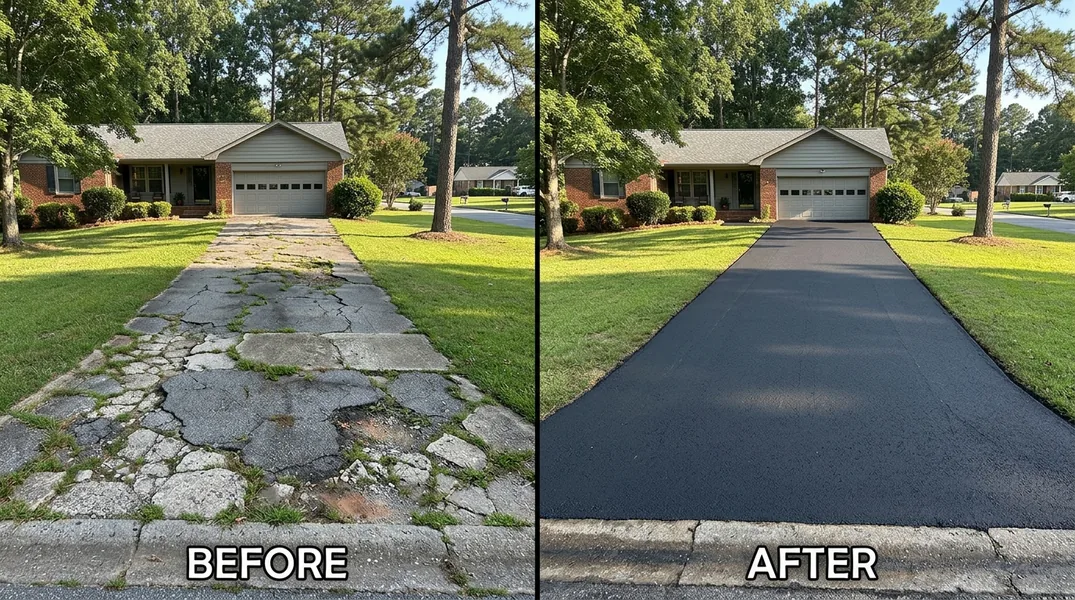
The Hidden Enemy: Piedmont Red Clay and Your Driveway
If you own a home or business in Atlanta, you live on some of the most challenging soil in the Southeast. Piedmont red clay, the dominant soil type across the region, is a silent threat to asphalt driveways. Unlike sandy or well-draining soils, this clay expands dramatically when wet and contracts when dry, creating a cycle of movement that no asphalt surface can fully withstand. Most homeowners blame poor installation or cheap materials, but the real culprit is often what lies beneath.
This geological reality means that even well-installed asphalt driveways in Atlanta face unique pressures. The clay's behavior is especially destructive during winter and spring, when freeze-thaw cycles accelerate damage. Understanding how Piedmont red clay affects your driveway is the first step toward making smart decisions about Driveway Repair or replacement.
How Frost Heave Destroys Atlanta Driveways
Frost heave is perhaps the most dramatic way Piedmont red clay damages asphalt. When temperatures drop below freezing, water trapped in the clay expands as it turns to ice. This expansion pushes upward with tremendous force, literally lifting sections of your driveway. When the ice melts, the soil settles unevenly, leaving your asphalt cracked, buckled, or sunken. This cycle repeats throughout the winter and early spring, progressively worsening the damage.
In Atlanta, frost heave may not be as severe as in northern states, but it still occurs regularly enough to cause significant problems. Homeowners often notice sudden cracks or small upheavals appearing overnight after a cold snap. The damage starts small, but without prompt attention, frost heave driveway repair becomes increasingly expensive. A small buckle can spread into a large section requiring major work, which is why early intervention matters. If you notice signs of frost heave on your driveway, contacting a professional for frost heave driveway repair should be a priority.
Potholes and Asphalt Patching: The Ongoing Battle
Potholes are the inevitable result of clay movement combined with traffic stress. As the clay beneath your driveway shifts and settles, it creates voids. When water seeps into these voids and freezes, the pressure increases further. Eventually, the asphalt above collapses inward, creating a pothole. In areas with heavy clay content like Atlanta, potholes can appear seemingly overnight, especially after heavy rain followed by cold weather.
The challenge with potholes is that they tend to multiply. Once one forms, the surrounding asphalt becomes weakened and more vulnerable to cracking and failure. This is why Pothole Repair & Asphalt Patching should never be delayed. A small pothole that costs a few hundred dollars to repair can become a large section requiring thousands in work if left unattended. Many homeowners attempt temporary fixes with cold-patch asphalt, but these rarely last in clay-heavy soil. Professional patching, done with proper preparation and hot-mix asphalt, provides a much longer-lasting solution. The key is addressing potholes quickly before they expand and compromise larger areas of your driveway.
Repair or Replace Asphalt Driveway: Making the Right Call
One of the most common questions homeowners ask is whether to repair or replace their damaged driveway. The answer depends on several factors, particularly how extensively the clay has affected the base and subgrade. If your driveway has isolated potholes or cracks in otherwise solid asphalt, Driveway Repair may be sufficient. However, if you're seeing widespread cracking patterns, multiple potholes, or large sections of buckling, replacement might be more cost-effective in the long run.
The underlying cause also matters. If the damage is purely surface-level, asphalt patching or Asphalt Resurfacing & Overlay can work well. But if the clay beneath has shifted significantly or if water damage has compromised the base layer, a full replacement with proper drainage solutions becomes necessary. This is where professional assessment is invaluable. A qualified contractor can evaluate the extent of clay-related damage and recommend whether repair or replacement makes sense for your specific situation and budget. When making this decision, it's wise to get a free estimate from an experienced local contractor who understands Piedmont clay challenges.
Asphalt Driveway Paving & Installation Near Me: When to Call a Pro
If you're considering new Asphalt Driveway Paving & Installation, understanding clay management is critical. A professional contractor won't simply lay asphalt over problem soil and hope for the best. Instead, they'll address drainage, ensure proper base preparation, and use construction methods designed to minimize clay-related movement. This might include adding gravel base layers, creating proper slope for water runoff, or installing drainage systems to keep water away from the clay.
The difference between a driveway that lasts fifteen years and one that fails in five often comes down to how well the contractor handles the Piedmont clay beneath the surface. When you're looking for quality asphalt paving services in Atlanta, ask potential contractors about their experience with local soil conditions and what measures they take to combat frost heave and clay movement. Atlanta Asphalt Paving has served the region for years and understands these challenges intimately. Whether you need a new driveway, repairs, or resurfacing, we can be reached at (678) 884-4654 to discuss your specific situation and provide expert guidance.
Protecting Your Investment: Prevention and Maintenance
The best defense against Piedmont clay damage is proactive maintenance. Keep your driveway clean and address small cracks immediately before water seeps into the base. Ensure water drains away from your driveway rather than pooling on it or running underneath. During winter months, be especially vigilant for signs of frost heave or new cracks. Seal coating your asphalt every two to three years provides a protective barrier that slows water penetration and extends the life of your surface.
Regular inspections also help catch problems early. If you notice new cracks, small potholes, or areas where the surface feels soft or unstable, these are warning signs that clay movement is occurring. Addressing these issues promptly with professional Pothole Repair & Asphalt Patching or other repair services can prevent more expensive damage later. The cost of preventive maintenance is always lower than the cost of major repairs or replacement. If you're unsure about the condition of your driveway or what maintenance steps to take, reach out to Atlanta Asphalt Paving for a professional evaluation and recommendations tailored to your property's needs.
Looking for a professional asphalt paving contractor in Atlanta? Atlanta Asphalt Paving responds fast for all your asphalt paving needs.
Get a Free Quote